ZED ZONE Skills Guide: Attributes, Doses, Traits and Best Builds
ZED ZONE skill system: four PDA attributes, skill tree doses from mutant tissue, traits, and three builds for stealth, firepower and base builders.
FAQ
What are the four attributes in ZED ZONE?
How do I unlock skill tree nodes?
What are traits in ZED ZONE?
How Does the ZED ZONE Skill System Work?
Character progression in ZED ZONE splits across three linked systems: four core attributes, a dose-driven skill tree, and passive traits. None of them uses a traditional XP bar — every point of power comes from what you scavenge, hunt and craft, which makes skills an extension of the loot loop rather than a separate grind. A survivor who fights well but farms poorly will still fall behind, because the tree literally consumes what you butcher. All systems below are described as of version 1.0.11, last verified November 8, 2026.
What Are the Four Attributes and Where Do I Spend Points?
Open your PDA and flip to the attribute page. You will find four stats:
| Attribute | Governs |
|---|---|
| Strength | Carry capacity and melee damage |
| Agility | Movement and stamina efficiency |
| Endurance | Health and stamina pools |
| Energy | Energy economy for sprinting and sustained actions |
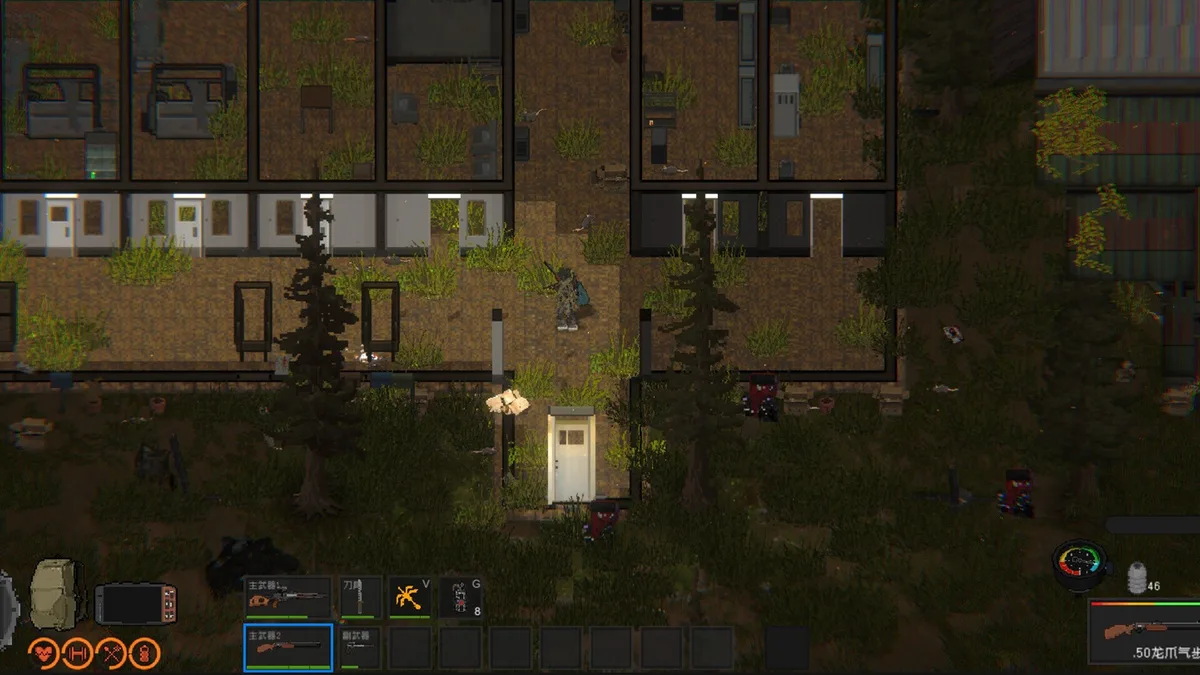
Attribute points are allocated manually on that PDA page, and reallocating rules for 1.0 are Community verification in progress. A practical reading of the four: strength is the quality-of-life king because carry weight gates every loot run; agility decides whether you dictate engagements or suffer them; endurance is the forgiveness stat that keeps small mistakes small; and energy sustains the sprint-and-fight rhythm that long POI clears demand. The PDA itself is worth learning early: the map page tracks POIs and vehicles, the character summary shows HP, stamina, energy, CAS and your vital signs, and the attribute page is where builds take shape. Our beginner guide walks through the PDA layout on day one.
How Do Doses Unlock the Skill Tree?
The skill tree is not unlocked with points. It is unlocked with doses — colored injectables (red, green and blue) that you craft at the Medicine Bench. The key ingredient is mutant tissue, butchered from Infected and other mutated enemies, with heavier variants like Splitters and the Millipede dropping it in quantity. This creates the central progression loop: fight mutants, butcher tissue, brew doses, unlock nodes.
Because doses are gated behind the Medicine Bench, your skill tree speed is effectively your chemistry speed. The full chain — Chemical Bench, acid production, nitrate powder, Medicine Bench — is laid out in our crafting and workbenches guide, and it is the single best reason to rush chemistry in the mid-game. Which dose color maps to which branch is Community verification in progress, so plan one branch at a time rather than hoarding randomly. As recorded during Early Access, red, green and blue doses are all Medicine Bench products, so every branch ultimately drinks from the same mutant tissue pipeline.
What Are Traits?
Traits are passive modifiers displayed on the character summary page of the PDA, next to your ECG, blood pressure and body temperature readouts. They shape how your survivor handles food poisoning, injuries and environmental hazards — the slow attrition systems that kill more runs than combat does. The exact list of traits, how they are acquired and whether any are negative in 1.0 are Community verification in progress — check the PDA summary page in your own run before planning around a specific trait.
What Is the Best Build for Stealth Play?
Stealth leans on agility and energy: stay light, keep stamina high for disengaging, and use the quietest weapons in the game. Bows and crossbows are the natural pairing — they are the quietest ranged option and pair with a low-attraction playstyle, and the compound bow stands at the top of the archery line as recorded during Early Access. Attribute priority: agility first, energy second, endurance third, strength only as needed for carry weight. Read the all-weapons overview for the noise trade-offs between bows, air guns and firearms before committing.
What Is the Best Build for Firepower?
Firepower inverts the priorities: endurance and strength carry the armor and ammunition load, while the skill tree doses unlock weapon-handling nodes. Firearms are the most flexible option but can jam, so budget repair materials and component sinks from the start. The mutant-farming loop feeds you twice here — tissue for doses, and drops that offset ammunition costs. Kiting a horde into a War Machine patrol converts a farming chore into free loot. Priorities: strength and endurance, then agility; harvest heavy mutant spawns with the mutants and robots tactics. Melee remains a real backup in this build — a well-maintained axe or katana saves ammunition on trash mobs and butchers the tissue your doses need.
What Is the Best Build for Base Builders?
Builders want strength above everything — carry weight is the single biggest quality-of-life stat when hauling wood, stone and scrap. Endurance second for long scavenging circuits. The trait and attribute system matters less here than infrastructure: get the crafting chain online, then push into voxel construction. Since the 1.0.10 hotfix added a Simple Mode for voxel building, base expansion is faster than it was at launch. Route your dose production toward utility nodes and keep a farm loop near home so corpse runs are short. In co-op, a builder pairs naturally with a firepower partner who covers POIs while the builder walls, crafts and repairs.
Can I Recover From a Bad Build?
Respec rules for 1.0 are Community verification in progress. Until confirmed, the safest discipline is to front-load flexible choices: strength and endurance are never wasted on any build, while heavy commitment to a single dose branch is the main thing you could regret. Spread early doses across one utility node and one combat node, then specialize once you know your endgame plan — whether that is the Escape Vessel finale or Horde Mode score chasing.
Related Articles
items
ZED ZONE Companions Guide: Equipment, Affinity and How It Works
How the ZED ZONE companion system works in 1.0: companion equipment, the affinity system added in 0.9.99.9.1, and what is still unverified after the 1.0 launch.
items
ZED ZONE Crafting Guide: Workbench Chain and Chemical Bench Recipes
ZED ZONE crafting guide: workbench unlock chain, Chemical Bench recipes for sulfuric acid, nitric acid, glue and nitrate powder, Medicine Bench unlock.
items
ZED ZONE Metal Component Guide: Farming and Every Advanced Use
Where to get metal components, mechanical, alloy and CNC components in ZED ZONE, plus the Spider Robot drop table and every crafting use for the component family.
Was this helpful?
Thanks for the feedback!